The Substance Of Things Not Seen
Irradiated by LabRat
One of the more interesting threads of discussion to evolve out of the previous two posts touching on religion is a discussion of faith, specifically the definition in Hebrews 11:
Now faith is being sure of what we hope for and certain of what we do not see.
This is, I rush to point out, going to be incredibly out of context with the rest of the passage, which has an entirely different intended point than the one I’m about to expound on, but it did lead to a commenter pointing out that everybody operates on implicit assumptions based on things they do not see and cannot be directly experienced. I attempted to use an analogy involving math and, as Roberta pointed out gently, managed to be quite spectacularly wrong in every respect of my example while still managing to come near a reasonable point. (Neat trick that, I’ll have to remember it.) As a caution, I am about to proceed to one of those pieces where I’m not entirely sure I make sense to me, but ultimately I decided trying and confusing a lot of people (again including me) was better than not trying.
I’ve made the point at great length before that what we perceive with our senses isn’t so much a direct reflection of reality as it is a representation of reality tailored by our brains to bring the useful and relevant aspects of reality to our attention. Much of reality-as-we-live in it is experienced by us only through inference; instruments we make built on principles we’ve inferred through careful experiment perceive things like, say, ultraviolet light for us, and the entire process of science- the study of natural law- is a process of seeing “the shape of things unseen”, i.e. the consistent principles of natural law that dictate the shapes that everything takes.
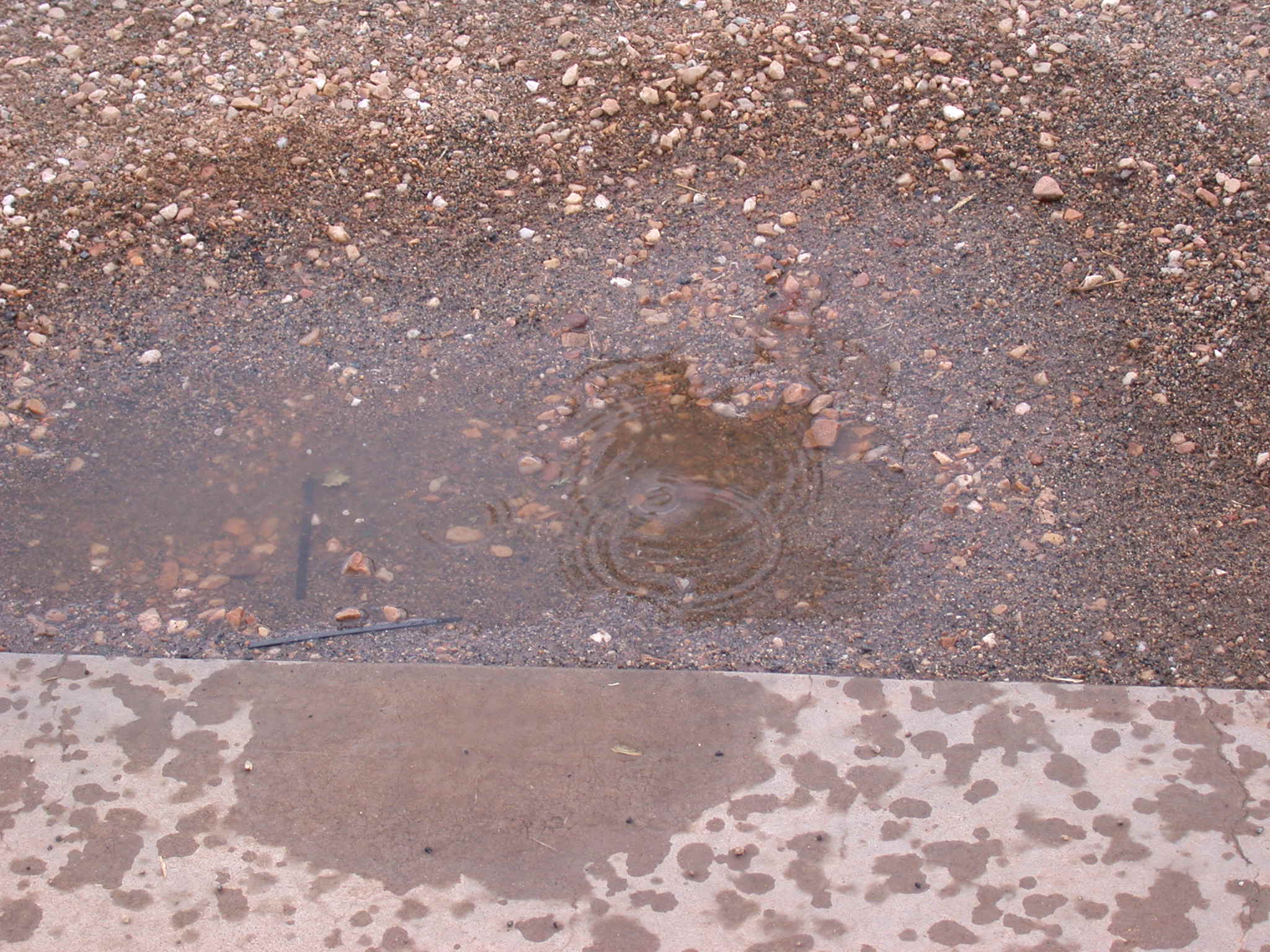
A river flowing down a mountain is, on several levels, a map of things unseen: on one level, it’s a map of the surface of the mountain, whose shape dictates which paths the water flows down. On another level, it’s a force diagram with a little fluid dynamics as well; the shape of the mountain’s surface dictates which paths the water takes, but gravity dictates that the path must always be in a certain direction (towards the lowest surface of Earth it can reach), and the force of the water also over time will dictate the shape of the mountain as it wears its paths deeper. The laws of motion are not seen in that F = m*a is not represented anywhere, but can be inferred from the fact that the flowing water, and everything else with mass, moves in predictable ways. The water will only move through spaces that are not ruled out by natural law; it can move in any direction permitted and will move in many directions down any surface, but will never flow up unless another force is introduced and also will not flow straight outward. There are many paths down, but down is the only option due to gravity. When the landscape limits the space of possible paths for the water by eliminating most of the possible forces on the water, it forms a puddle and stays that way.
Evolution works in much the same way, in that life will diversify but will only do so in ways and shapes dictated by the possibilities available given the constraints of natural law. You will find a very large variety of body shapes in an ocean, but depending on what the ocean animal itself does, they will have certain tendencies to converge- toward, for example, a torpedo-eseque shape with control surfaces for a free-swimming animal. What you will not see despite the range of diversity is any animal shaped like a horse, because that shape is optimized for frequent fast, long motion on a flat surface with no support for its body weight other than its skeleton.
Ocean life may “flow” evolutionarily in any direction, just so long as its path includes an ability to manipulate its position in water, an ability to gain carbon and energy from the resources in water, and an ability to carry out its reproduction in water. Each time in fossil history that a lineage has transitioned from marine life to land life or back again, the shapes the resulting animals take tell us something about the nature of water and land respectively, just as the flowing water tells us something about the nature of the landscape. When conditions sharply narrow the range of possibilities for life, diversity narrows accordingly; rainforests feature libraries of diversity so vast it may never be fully categorized.
The resulting picture in water terms may look something like this: 
A deep-sea thermal vent may only feature a few species of archaebacteria that can handle and profit off the heat and extreme chemical conditions. In terms of water flow, more like this:
Likewise, the way that human cultures and societies “flow” across the shape of history also take on shapes that are defined by forces shaping the forms of the possible. Humans adopt profound diversities of music and art, but the shapes that currency takes tend to be highly defined, because it has strict conditions for being able to function in that role. Cultures vary hugely and diversely in their taboos and expressions of “manners”, but they all tend to include a relatively short subset list of items within the “don’ts”- murder, theft, assault. There may be specific social contexts in which killing someone is considered acceptable, but there is no such thing as a society in which casually killing someone because they annoyed you is not forbidden. It is not possible to have a stable society of humans which does not include certain rules, though there may be and likely will be many, many other rules- it’s just that some have much greater ranges of possible variation than others. The nature of the directly acting forces have sources both concrete- the biology of our brains and bodies- and abstract, such as the consequences of abstract intelligence and the forms that it itself creates and manipulates.
Atheists and believers both believe in the substance of things unseen. With respect, I would not define that as “faith”, so much as an acceptance that our knowledge of the nature of our reality is inherently limited. The distinction is that the believers believe that both the forces shaping humanity and its behavior- including morality- and the forces writeable in natural law have a single source and a single, intelligent author and intent. That, and the belief that that force is even partially knowable in the same way natural law is partially knowable, is what I would identify as faith.

May 27th, 2010 at 7:33 pm
This is the best thing I’ve ever read about science and religion. Thank you.
May 27th, 2010 at 9:50 pm
Or it could be based on the last words spoken ”
Shit” or “Godammit”.
May 28th, 2010 at 6:06 am
Applying your metaphor to Dr Feelgood’s hypothesis that (to paraphrase very badly) the cultural effects of the story of Jesus’s resurrection can tell us something about the veracity of that story may help illustrate the fundamental difference in the way he and I view history.
If I read him correctly, he’s essentially saying that studying the ebb and flow of the stream of history can give us a good idea of the shape of a rock under the surface. From my point of view, studying the flow tells us mostly the gross rules for how the flow responds to rocks of a certain general size, but the complexity of the system means it can shed little light on the particulars of any given rock.
It’s an intimidatingly complicated question, and one I expect professional historians have already murdered millions of trees over.
May 28th, 2010 at 10:07 am
Elmo: Once you start thinking in water metaphors, I’ve found it difficult to stop…
One thing that didn’t really belong in the main post but I regretted not being able to gracefully point out was that unlike water systems, both life and culture share the complicating feature that the various components of the system interact with each other and produce new currents out of those interactions.
May 28th, 2010 at 1:49 pm
elmo, your evaluation is more or less accurate, except I focused not on the broad cultural effects but on the practical, individual points of discontinuity in the history subsequent to the crucifixion and resurrection to establish the historicity of that specific event. I invoked the broader results as a means of demonstrating that the story’s early, wide exposure made it available for falsification, to establish the general reliability of our contemporary New Testament.
If I understand LabRat correctly, you’re saying that we can understand the unseen by observing what is seen, under the assumptions that there are rules that govern the interaction, that these rules are universal and inviolable, and that we can understand them. These (reasonable) assumptions make up the core of the naturalist worldview, and therein is the crux of my objection. In the naturalist worldview, there is no accommodation for supernatural influence—a force or intelligence (whether human or divine) that operates apart from natural law. While conclusions drawn within the naturalist worldview are generally void of faith, the assumptions that premise those conclusions are held by faith. So in the analogy, it’s not the forces that shape the water which are unseen, it is the laws that govern those forces. I know that looks like a semantic distinction, but it’s not. We can observe the forces, but we cannot explain their existence. They simply are—at least, we believe they are. Experimentation doesn’t explain the substance of the force; it only decreases our faith in the force by increasing our certainty of its predictability. Well-established laws (gravity, for instance) are accepted with a high degree of certainty, to the point where faith is negligible and most people are unaware of its role in making up the certainty gap. But I don’t really have faith in gravity itself, what I have faith in is the law of gravity that says it’s universal and inviolable. I can’t possibly know that, but it makes sense and I believe it.
To work on the analogy a bit (and stretch it perhaps to where it’s unwarranted), I would add that we can trace the stream in reverse (perhaps using historical analysis ) to discover where and why it diverged from the source. Once there we can make our best educated guesses, based on observations of other channels. But suppose the diversion exhibits some characteristic that hasn’t been observed in other channels. We may end up with competing hypotheses for the origin of that characteristic and subsequent diversion, divided into camps of those who think it naturally came about and those who think someone dug it. We’ll spend the next however-many millennia analyzing it and discussing (hopefully as cordially as we have here) the relative merits of the competing hypotheses. The naturalists will focus on ‘how’ it came about, while the supernaturalists (or intelligence-interventionists) will focus on ‘why’ it’s there, with a fair amount of overlap between the two. They’ll look at the same bits and pieces, study the same evidence, and draw dramatically different conclusions based on their worldviews. BTW, I’m sorry to introduce the possibility of a person interfering in the analogy. I tried and tried but couldn’t figure out a way to imbue the water or creek-bed with choice (illustrating my take on your regret at not adequately accounting for complex-which I read as intelligent-interactions).
What might make it funnier is if somebody finds a piece of paper nearby that says, “I dug it.” That person would stand on a rock trying to convince people that the message had merit apart from the scientific analysis of the page, and he’d probably take flack from both sides for being irrational. /martyr complex
It’s reasonable to extrapolate from social patterns a series of “reasons” for development and apply those reasons to other such developments. This is entirely consistent from within a naturalist framework. If, fundamentally, all actions and thoughts have an origin in the laws of matter and energy then humans are ultimately predictable, though only to those who have sufficient knowledge of those laws and the processing power to analyze and apply them. It makes sense for secular social scientists to try and discover these barest hints of that predictability since the kind of information processing required to do the full analysis is beyond our capabilities, and may always be.
If, on the other hand, the Bible’s worldview is true then God made men and women in His image, giving us free-will, which is the exercise of choice irrespective of natural law. In other words, quantum mechanics, chemistry, and physics do not govern my decision making, even though they may have a role in thought processes. I suppose I’d call this idea the foundation of personal accountability. But the Bible’s worldview contains two truths that mask the effects of free-will in complex systems. First, it makes plain that the natural man is a slave to his own sin (rebellion against God’s laws) and is free to choose only from among the set of natural options (“what is right in his own eyes”). It might even be true that the natural man is indeed ruled by natural law. The second truth is that the vast majority of people persist in their natural state. According to the Bible, only believers are truly free (“free indeed”) to choose from the set of all available options. To the naturalist these sets are union, but not so for the believer. The meager efforts of a handful of free people are not substantial enough to alter the natural development of social patterns. It’s a matter of competing influences, and believers are vastly overwhelmed by natural folks. And this is mitigated even further by the fact that living believers remain fallen people who frequently choose from the natural set. In other words, the Bible basically stipulates that the overwhelming majority of behavioral evidence will be consistent with the naturalist worldview. So in the case of social development, the evidence is consistent with both worldviews.
If I were you, I might be tempted to smack that argument as a rationalization-another way to hide God in the natural world (see my earlier disclaimer). First, consider that I’ve interpreted the relevant Bible passages plainly and in context. Second, humor my claim that God wants to be hidden, at least for now. Third, if this is a weakness of the Biblical worldview then it is more than balanced by the prophetic accuracy of the Bible. Since God can’t (self-imposed) manipulate peoples’ choices, He chose instead to reveal Himself by telling us in advance how those choices would work out, on the grand scale.
The difference between worldviews is critical. In the natural one everything must have an explanation rooted in natural laws governing mass and energy (I admit, quantum mechanics makes for some interesting thinking about the nature of free-will in a naturalist worldview). Taken to its philosophical extreme, humans in this worldview are inherently passive. In the supernatural one, intelligence (human and divine) is not constrained to operate according to natural laws, and is therefore freely active in shaping events. Once again we arrive at mutual uncertainties (mine being complemented by faith in God’s character), heralded by high degrees of certainty internally consistent within competing worldviews. And the necessary doubt inherent in each worldview renders them equally valid. That does not mean they’re equally satisfying, primarily because you have a choice (assuming my worldview) in what you will and won’t accept by faith.
May 28th, 2010 at 4:24 pm
I’ve spent my day at the range, playing with the dogs, and later with pizza- I will work on a far more detailed response tomorrow, unless Stingray/life has a surprise project for me.
I will say now first that you’ve got a few fatally flawed assumptions in there of the naturalist worldview. Addressing that which is easy and straightforward to correct,
illustrating my take on your regret at not adequately accounting for complex–which I read as intelligent–interactions
Not in the least. Intelligence is not necessary for parts of the system to become not only complicit with one another, but fundamentally change the nature of the system. The best example I can think of is the Oxygen Holocaust of many billion years ago, in which ancient relatives of cyanobacteria evolved a photosynthetic metabolism whose waste product was oxygen. Oxygen was at the time extremely toxic to almost everything living, and this changed the space of the possible for all life on earth dramatically by killing or driving into remote spaces everything that could not tolerate oxygen and giving an energy source whose massive potential dwarfed all other comparable sources to everything that could. Life on earth has been- not consciously or intelligently- repeatedly re-engineering its own environment ever since.
Assumption that is wrong that is NOT correctable in a brief time frame and might take something book-length to do:
If, fundamentally, all actions and thoughts have an origin in the laws of matter and energy then humans are ultimately predictable
Nope. You can get completely impossible to predict complexity out of extremely simple sets of rules, let alone the sets that actually govern the universe and life. (Which may, in fact, be simple. We don’t really know, though physicists are betting that way.) You can also get simplicity through extremely complex rules. Human behavior falls way, WAY outside the bounds of predictability from physical law.
Langton’s Ant is the favorite example to demonstrate the basic principle because we KNOW the rules because someone wrote them. There are, in fact, only two rules- but it is impossible to predict what the program will do except by noting from observation certain things it always eventually does, which incidentally no one knows why it does those certain things. Absolutely nothing in either the rules or each sequential step the ant takes offers an explanation for it. You can go back and watch the ant follow the rules, but a 145,854,00 step “explanation” that differs but leads to the same result each time is a useless explanation.
Trying to predict human behavior via physics would be like that, except exponentially worse.
Third, if this is a weakness of the Biblical worldview then it is more than balanced by the prophetic accuracy of the Bible. Since God can’t (self-imposed) manipulate peoples’ choices, He chose instead to reveal Himself by telling us in advance how those choices would work out, on the grand scale.
Please explain exactly what you mean by this. If I’m correct in my current assumption I can answer this in very few words indeed.
May 28th, 2010 at 9:29 pm
I didn’t mean to say that complexity requires intelligence. It was probably my error to conflate the two in your analogy. To piggyback on your analogy from within my worldview, I had to insert a supernatural influence, and I chose intelligence because I believe humans are possessed of free will and it was something with which I knew you were familiar.
I’m a little acquainted with cellular automata, though you’ll have to forgive my lack of familiarity with emergence (my only limited exposure is in the realm of urban architecture). While there is no mathematical model for predicting the seemingly random behavior of, say, an Ant, my contention still stands that predictability would be acheived if all conditions of the interaction were known (I didn’t quite phrase that clearly the first go-round) and able to be evaluated. It’s not impossible, per se, but humans will likely never be able to do it. It seems I’m guilty of presuming omniscience, which is consistent with my worldview.
And on to the prophecy. Do you have to drool so loudly while you watch me run headlong in to the trap? I have some pet favorites, notably the book of Daniel’s foretelling of the major empires of antiquity (from Babylon to Rome) and specific prophecy about the year in which Messiah would be cut off. The latter even withstands the natural bias of modern critics who date the book to BC 165, owing to copies found at Qum’ran, though it’s internal characteristics suggest a much earlier date (6th century BC).
*dons protective suit*
May 28th, 2010 at 9:41 pm
LR -
Given your statement Evolution works in much the same way, in that life will diversify but will only do so in ways and shapes dictated by the possibilities available given the constraints of natural law. - would it be fair to extrapolate that the diversity of social mores in a society is to some extent related to how severe the containing environment is?
That is - woud “bronze age deserts have significantly less leeway for ‘acceptable behavior’ than industrial age cities,” be a valid thing to draw from what you’ve said? It makes intuitive sense, but intuition can be wrong and I’d like to make certain I’m not misunderstanding your point.
May 28th, 2010 at 9:59 pm
That is – woud “bronze age deserts have significantly less leeway for ‘acceptable behavior’ than industrial age cities,” be a valid thing to draw from what you’ve said? It makes intuitive sense, but intuition can be wrong and I’d like to make certain I’m not misunderstanding your point.
Yes! It would be a fine extrapolation, though as with many things it’d have a lot of specific conditionals depending on the type of behavior; social rules about where you deposit your trash, for example, have a much bigger impact in an industrial city of thousands than they do in a nomadic pastoralist group of maybe 150 people. Thus, why littering is such a disproportionate modern “sin”, whereas we see less of a big deal in, say, letting various kinds of cattle graze together and multiple crops grow in the same field. Two Levitican laws that had MAJOR implications in a small agricultural society and now seem hilariously irrelevant.
May 28th, 2010 at 10:16 pm
While there is no mathematical model for predicting the seemingly random behavior of, say, an Ant, my contention still stands that predictability would be acheived if all conditions of the interaction were known (I didn’t quite phrase that clearly the first go-round) and able to be evaluated.
But, that’s the entire point of the Ant- all conditions of interaction are known, because a human had to write them in order to make the program run. There are only two. The only thing that changes is the preconditions, which also have only two possible states for each square in the grid. From two rules and two possible conditions for each bit of the map arises a series of steps completley unpredictable except at the moment-to-moment level.
Chess games are similar- it is utterly impossible to tell from any given snapshot of a board what has come before or what will follow, even though the entire thing is governed by a short list of rules. The Ant is a better example because a chess game is run by two intelligences even though the rules never change.
(ETA: more detailed will still follow. It’s late. This was easy and fast to answer and answers here may simplify answers later. Or just complicate them more.)
May 29th, 2010 at 3:12 pm
Easy to start here before I go back since I specifically wanted this bit clarified,
And on to the prophecy. Do you have to drool so loudly while you watch me run headlong in to the trap? I have some pet favorites, notably the book of Daniel’s foretelling of the major empires of antiquity (from Babylon to Rome) and specific prophecy about the year in which Messiah would be cut off. The latter even withstands the natural bias of modern critics who date the book to BC 165, owing to copies found at Qum’ran, though it’s internal characteristics suggest a much earlier date (6th century BC).
*dons protective suit*
Hee, I don’t think you knew what exactly I had in mind. Yes, it’s relatively easy to “debunk” prophecy in the sense that it all tends to follow the same “cold reading” principles that allow a prophesizer to apparently predict (or, as a psychic, read) a great number of things without actually needing to be accurate at all- if the person reading is inclined or even neutrally inclined, their own minds will fill in the rest of the detail without them even needing to be aware of it. For example, I’d point out that your example of the Bible predicting the time of Messiah ending around Jesus’s time is only accurate if you start with the assumption that Jesus Christ was in fact the Messiah. Mainstream Judaism disagrees, as do Muslims, and anyone else in general that does not believe there has been a Messiah- either “yet” or because one’s not coming, period.
Cold reading aside- which is where I suspect the bits about the major empires of antiquity comes in, though given the widespread disagreement about which bits date to which, could also just be history- I was going somewhere entirely different with the Bible’s gift of prophecy. Of course, this is where the worldview difference comes in; you mean something much more specific in “prophecy” than I do, which I usually interpret as “high degree of predictive power”.
Where I WAS going with this was the high degree to which the Bible actually contains good advice for living ethically and maintaining psychological health, which is one practical reason so much effort is spent on analyzing it and figuring out how to apply it in a modern context. I was going to explain that within my worldview, this is logical and predicted.
Developing an intelligence capable of abstract reasoning and conclusion, as well as a highly advanced degree of sociality, creates a number of special problems that have to be addressed culturally; we are not programmed for ethicality or any of the other system we require to address living in novel contexts like civilizations (call it sin nature or the nature of addressing the question of ethics via hardware designed primarily to find the ripe fruit and avoid predators), we must build cultural structures to help us accomplish it and to transmit these tools to new generations. “Religion”- which I put in quotations because it’s one term for a broad mishmash of ethics, philosophy, social mores, belief in the supernatural, and plain superstition- is a cultural universal because this is universally necessary for humans post the problem of intelligence.
Any successful religion that persists and spreads over time isn’t a “virus” as Dawkins describes, it’s a suite of cultural adaptations- it’s accurate about human nature because it would not have survived if it were not. It contains things that seem or actively are nonsensical because that’s part of both biological and cultural evolution alike; there is generally no way to easily tell which bits are adaptive, which bits were adaptive and are now maladaptive, and which bits were adaptive and are now adaptively neutral- or were adaptively neutral all along.
May 29th, 2010 at 3:35 pm
At this point I am coming to understand we have serious potential for completely exhausting each other; please let me know if there is any point of discussion you no longer regard as terribly urgent and rest assured when I skip something it’s because I’m making that assumption myself.
If I understand LabRat correctly, you’re saying that we can understand the unseen by observing what is seen, under the assumptions that there are rules that govern the interaction, that these rules are universal and inviolable, and that we can understand them.
An accurate description of both our worldviews, with the only distinction being that one of us comes to that conclusion because the world is, in fact, consistent, and the other does because it makes sense for the God to have created it to be entirely consistent except when making a point.
the naturalist worldview, there is no accommodation for supernatural influence—a force or intelligence (whether human or divine) that operates apart from natural law.
Where we diverge is I am completely at a loss as to why one should be necessary.
I know that looks like a semantic distinction, but it’s not. We can observe the forces, but we cannot explain their existence. They simply are—at least, we believe they are.
Earlier on you summarized your worldview with God’s statement on the answer to “why” as “Because I am”. I find positing a creator whose nature is inhernetly unknowable and whose motives are deliberately vague to be an even less satisfying answer to the question “Why?” than the alternative answer that must eventually boil down to “because that’s how it is”.
It’s reasonable to extrapolate from social patterns a series of “reasons” for development and apply those reasons to other such developments. This is entirely consistent from within a naturalist framework.
One of the things I was trying to get across in the original and clearly only hinted at to someone who wasn’t already thinking the way I was is that all such “force maps” as I was describing them work on multiple levels; a stream is a map of gravity and other “deep” fundamental natural laws, but also maps of geology and maps of the results of the sorts of math broadly known as chaos theory. You can’t start at gravity, add water, and get a map of the stream’s path- but the path does nonetheless tell you about gravity.
To create another analogy to torture, if I’m investigating, say, a car accident, it may well be true that fundamental physical forces made it inevitable for the car to go off the road- but they’re entirely irrelevant considerations compared to the deer prints just on the verge, a bit ahead of where the skid marks started. We might say that it’s an entirely other kind of rule, if not one that can be represented mathematically or connected to other rules via reductionism, that a driver’s reflex will be to avoid the two hundred pound living animal in his path even if the consequences will be even worse than hitting it.
If, on the other hand, the Bible’s worldview is true then God made men and women in His image, giving us free-will, which is the exercise of choice irrespective of natural law. In other words, quantum mechanics, chemistry, and physics do not govern my decision making, even though they may have a role in thought processes. I suppose I’d call this idea the foundation of personal accountability.
Now you’re starting to lose me again. Since I think we’re off on a different track in discussing complexity- reductionism is merely one way to approach the nature of things, and not one that works all the time, and right now I *think* you’re positing reductionism and naturalism as the same thing- I’ll go off on a different track for this section, which is asking you what you’re describing as choices available to a believer that aren’t available to a nonbeliever. Because one thing I really hope we agree on is that atheists, or to pick a “religious” example that doesn’t involve your version of God, Buddhists, can be ethical and make choices that have nothing to do with rational self-interest.
A ways back I wrote a whopper of a post in conjunction with a friend covering the subject of free will- or rather, mine more covered the nature of complexity and went further into that territory (again I used the poor Ant), and his specifically addressed free will. Should I link or do we both have enough homework now?
June 1st, 2010 at 3:17 pm
A refreshing weekend took the edge off of that exhaustion, which I was feeling a bit, too. I think we agree on the terms of continuation, and I won’t assume that you’re glossing over anything just because you’ve decided it’s no longer salient to your point, unless it’s essential to mine
At the risk of devolving into a point-counterpoint format:
An accurate description of both our worldviews, with the only distinction being that one of us comes to that conclusion because the world is, in fact, consistent, and the other does because it makes sense for the God to have created it to be entirely consistent except when making a point.
Just a minor quibble to note that God’s supernatural point-making is not inconsistent with His nature, which is the source of order in the created universe. As property rights holder to all matter, energy, and time God is ‘permitted’ to ‘violate’ natural law at His discretion.
Where we diverge is I am completely at a loss as to why one should be necessary.
If a certain event has necessary causes A, B, or C then is it rational to posit and defend cause Q? While some may exercise their free will to believe Q in spite of the evidence (see Retarded Faith) that’s hardly a reasonable alternative, and as such doesn’t truly honor the value of personal choice. In fewer words, if God is necessary to the equation then the naturalist worldview is irrational, and therefore it is not a viable choice. I started to make this point to suggest that maybe God restrains Himself so that His existence is not necessary to our understanding of the universe and that He does so to provide space for free will. But after kicking it around, perhaps what I’m endeavoring to demonstrate is that genuine miracles do make God (god/gods/FSM) necessary. A single miraculous event (high bar for proof, I’m well aware) invalidates the naturalist worldview. I suppose that’s why I keep returning to the Resurrection. It’s probably the best-documented event available that clearly has no explanation beside supernatural influence, if it occurred as claimed.
Earlier on you summarized your worldview with God’s statement on the answer to “why” as “Because I am”. I find positing a creator whose nature is inhernetly unknowable and whose motives are deliberately vague to be an even less satisfying answer to the question “Why?” than the alternative answer that must eventually boil down to “because that’s how it is”.
Except that God is not unknowable, at least the Christian God isn’t. Even if your worldview is right, the written Bible provides a rigid philosophical framework by which we can understand a hypothetical God who, in order to be internally consistent, has set personal standards for behavior and decision making. So while His actions (or permissive inactions, of which He’s interminably accused) may appear to be vague and unknowable, His motives are laid down in print for the ultimate in accountability. How much criticism of God’s character is leveled by non-believers who purport to hold Him to His own standards by citing passages from the Bible? And rightly so. God wants to be tested, and He will by no means fail to prove Himself to those who keep asking, keep seeking, and keep knocking. People, believers and non-believers alike, have made some kind of sport out of asking “Why?” of God in public fashion. With all due respect, the answers are already written down. If you want to know what motivates God, it’s right there. The whole world can judge Him by it, and I’ll happily take up the defense.
I’ve not quite fully apprehended your point in the discussion of force maps and your subsequent car analogy, but it may touch on what I was thinking about earlier with my comment on personal accountability, which you also quoted. What I’m considering is determinism since it’s a logical conclusion of the naturalist worldview. I suggested that its opposite, free-will, is empirical confirmation of the supernatural worldview. So I’ll have to dig in to your free-will post to see how your worldview accommodates immaterial forces like intelligence.
And on the subject of choice, I naturally wouldn’t suggest that the sets available to believers and non-believers had everything to do with ethics or moral behavior. Moral choices are available in the natural set. The Bible says that God has written His law in our hearts, so that even the natural man knows good from evil. On the other hand, my reading of the Bible suggests (I haven’t fleshed this out fully) that that natural man is only able to act on self-interest (rational or otherwise). It’s a question of motives that can’t be proven solely by behaviors. This is why God judges men’s hearts as well as their deeds-not as it pertains to Heaven or Hell (that determination is made by one single personal choice) but rather to reveal in us our character strengths and weaknesses, for our own benefit. Judgement-comparison to the standard (perfection)-teaches us about who we are. Practically speaking, my experiences with atheists have been largely pleasant, but I’ve been blessed with finely-tuned radar for acrimony and can generally avoid it.
June 1st, 2010 at 3:21 pm
BTW, that radar for acrimony gets adequate exercise among believers, too.
June 2nd, 2010 at 12:55 pm
A refreshing weekend took the edge off of that exhaustion, which I was feeling a bit, too. I think we agree on the terms of continuation, and I won’t assume that you’re glossing over anything just because you’ve decided it’s no longer salient to your point, unless it’s essential to mine.
And, likewise. I know I’ll be reiterating some older threads of discussion here.
Also, I think you’re responsible for a roughly ten to fifteen percent bump in my daily caffeine consumption. Certainly for the can of Pepsi Max I just fished out of the fridge.
Just a minor quibble to note that God’s supernatural point-making is not inconsistent with His nature, which is the source of order in the created universe. As property rights holder to all matter, energy, and time God is ‘permitted’ to ‘violate’ natural law at His discretion.
I think we can dispense with this thread. I would have agreed with this point as regards to any posited supernatural lawgiver.
But after kicking it around, perhaps what I’m endeavoring to demonstrate is that genuine miracles do make God (god/gods/FSM) necessary. A single miraculous event (high bar for proof, I’m well aware) invalidates the naturalist worldview. I suppose that’s why I keep returning to the Resurrection. It’s probably the best-documented event available that clearly has no explanation beside supernatural influence, if it occurred as claimed.
An efficient narrowing down of our actual points of disagreement- although I’d note that as Elmo pointed out, most of the historical evidence for said miracle rather does come from the same book claiming His existence (in a certain form, anyway, it’s far from the only text claiming to describe a supernatural force) in the first place.
But, as has been reiterated: it is consistent with your worldview that God would naturally leave room for doubt, so continuing to quibble over this is probably entirely beside the point. The likeliness and necessary doubtability of the resurrection isn’t really the reason I find the Bible in general difficult to swallow as a genuine description of God-as-really-exists and specifically His relationship to humanity anyway.
So while His actions (or permissive inactions, of which He’s interminably accused) may appear to be vague and unknowable, His motives are laid down in print for the ultimate in accountability. How much criticism of God’s character is leveled by non-believers who purport to hold Him to His own standards by citing passages from the Bible? And rightly so. God wants to be tested, and He will by no means fail to prove Himself to those who keep asking, keep seeking, and keep knocking. People, believers and non-believers alike, have made some kind of sport out of asking “Why?” of God in public fashion. With all due respect, the answers are already written down. If you want to know what motivates God, it’s right there. The whole world can judge Him by it, and I’ll happily take up the defense.
Mkay. See, the thing of it is, nonbelievers question this way not so much because it’s fun for us (though for some it surely is), but because God is the stated standard for a universal morality, one you assert later on is written into our hearts so that we may intuit right and wrong without needing to read about it. So when God does things that are blatantly cruel and most importantly arbitrary- punishing whole groups of humans for things they had no way of avoiding or knowing were wrong in the first place or were in no way whatsoever individually responsible for, within a religious and philosophical framework that places ultimate emphasis on individual conscience and responsibility- that invites question. And the answer given is usually some variation on “because you’re mine and I can”. This is an answer we societally reject when offered as a defense of any number of other crimes- like slavery or abuse of children- based on that same standard of morality. So when you essentially say, “the standard doesn’t apply to God because God is God and has ultimate authority”, the next question that invites is the worth of this model of morality, if our hearts themselves instinctively reject this line of reasoning as leading to evil. I’m probably making some wrong assumptions here with regards to you personally, but that is the gist of “apologetics vs. people who nitpick the Bible over God’s actions”.
Or, to put it more personally, explain to me God-of-the-Bible’s motivation for approaching His relationship with humanity by first tempting them, watching them fall, backing one particular tribe while tumbling them through Middle Eastern politics for a thousand years or so, and then scrapping the old approach and redeeming humanity via blood sacrifice, THEN setting the terms of any further relationship as having the sacrifice as a personal go-between with one’s individual actions having a vastly lower importance to the fate of one’s soul than one’s acceptance of these things as truth.
The reason I say “God is unknowable” is part of your worldview- and I may well be mistaken on that- is that every single time I have asked this question of a strong believer and it has not been entirely dodged, the answer I have received is some variant on “we cannot understand the mind of God”.
I’ve not quite fully apprehended your point in the discussion of force maps and your subsequent car analogy
I’ve not been entirely clear, mostly because I’m still working out what I actually mean in my own head. I’m throwing analogies and being vague at you because I’m using you something of a human drafting board for the shape of the ideas I’m trying to put into words. Sorry. If it’s at all cheering, it’s working.
What I’m considering is determinism since it’s a logical conclusion of the naturalist worldview. I suggested that its opposite, free-will, is empirical confirmation of the supernatural worldview. So I’ll have to dig in to your free-will post to see how your worldview accommodates immaterial forces like intelligence.
The latter is actually much more addressed in Vertel’s post than it is in mine; the idea that originally captured my imagination was the vast gulf between the way physicists and biologists tend to approach both their work and philosophy, and the underlying reasons for that in the structure of the things they study. Vert’s mind was the one that was captivated by free will versus determinism.
Let me see if I can be clearer in trying to articulate why determinism isn’t really part and parcel of having a naturalistic worldview.
The reason I keep hammering Langton’s Ant in discussions of these subjects is that its existence is concrete proof that merely having all the rules to something’s universe does not mean that you have any power to predict the course it takes or to explain coherently why something happened the way it did. The Ant only has the two rules and its universe is both extremely simple and completely defined- and even though we know every single thing that defines the Ant and can watch everything it does, we have no meaningful power to predict- we can’t beyond the next step or maybe two in its sequence- and equally no power to meaningfully explain why it took the course it did or why it follows the patterns it does. Clearly it does have patterns since eventually it always does the same thing and it also does several other patterned things if you define the initial conditions in certain ways, we just don’t know why- and knowing absolutely every rule doesn’t make a damn bit of difference in figuring it out.
If a two-instruction computer program with a completely contained world can behave this way and not be remotely susceptible to reductionism, or predictions beyond the crudest “we know it will behave this way because we have observed it behaving this way in the past”, why on earth should any naturalist expect that life, especially intelligent life, would be different? (I am aware that some do. I simply think they are grievously mistaken.)
When I describe systems as maps of forces, I don’t always mean physics. A water system is easy to understand because it is entirely a map of physics, but life isn’t and neither are human behaviors. Evolutionary biologists, when studying the system of life over time, do have some mathematical models, but they’re never used the way models are used in physics because they always have rules that life itself is too chaotic to conform to; they’re sometimes proof of concept to show that something is possible (like the Hardy-Weinberg equilibrium equation), and sometimes ways to roughly model observed patterns and help inform the scientists which of their guesses about the most influential variables are likely to be correct, but they can’t actually serve as a way to reliably reproduce in a fashion symbolized by numbers what happens, and then predict it, the way you can mathematically describe the motion of planets.
To go back to my accident-investigation analogy, the laws of physics govern how the car travels along the road and what happens when the driver slams on his brakes and spin the wheel, but they are in no way relevant to investigating the causes of the accident. The forces that actually caused the accident were human instinct (avoid the animal!), combined with the local deer population levels, combined with the fact that nothing in a deer’s course of evolution prepared it to cope with objects that weigh tons, are made of metal, and travel at sixty miles per hour along set courses, combined with happenstance. We can observe the patterns such forces make and their consistency, which is why we can investigate accidents and come up with reliable reports- but we can’t describe them with math, or predict them beforehand with accuracy.
To put it into a single sentence: Knowing all the rules to a system can only enable you to predict what absolutely will not happen and not what will… except in special cases. However, because humans are creatures of pattern recognition and we adore consistent and intuitive patterns, we tend to treat the special cases as though they were expressing a universality of how the world works.
Edited to add: I just realized I kind of sidestepped the overall philosophical argument. Smarter people than me have spent books arguing about free will and attempting to describe its origin. I’m just explaining why it’s not odd from a purely naturalist perspective; examples of emergent behavior that cannot be dissected are everywhere, therefore free will is not surprising or troubling to me without a supernatural explanation.
set. The Bible says that God has written His law in our hearts, so that even the natural man knows good from evil. On the other hand, my reading of the Bible suggests (I haven’t fleshed this out fully) that that natural man is only able to act on self-interest (rational or otherwise)
You already see the problem with this, and your solution is both logically internally consistent and completely unconvincing to an outside point of view. What interests me with the problem in general is that it is completely within self-interest, if God is real and accurately described in the Bible, to behave in accordance with your best guess of His will. It’s difficult to come up with a situation in which a believer acting in accordance with faith is in any way acting in a way that is not rationally self-interested. What, then, of the atheist sacrificing against his material self-interest out of the belief that it’s “the right thing to do”?
Making this rather more interesting is the wrinkle of people with martyr complexes that believe sacrificing of themselves is the right thing to do regardless of any good and even harm it actually does. They cannot see themselves as good unless they’re “doing for others” even if they destroy themselves and others in the process.
Practically speaking, my experiences with atheists have been largely pleasant, but I’ve been blessed with finely-tuned radar for acrimony and can generally avoid it.
I could say the same. I’ve seen some quite astonishingly nasty behavior from believers because I’ve been pointed at it, but my actual spontaneous experiences have been almost universally positive.