So, it seems that those who were hoping the Pacific war followup to the wonderful HBO series Band of Brothers would be more of the same are in for disappointment. From an interview with Tom Hanks regarding the series:
But the context for Hanks’ history lessons has changed. Band of Brothers, HBO’s best-selling DVD to date, began airing two days before 9/11; The Pacific, his new 10-hour epic about the Pacific theater in World War II, plays out against a very different backdrop, when the country is weary of war and American exceptionalism is a much tougher sell. World War II in the European theater was a case of massive armies arrayed against an unambiguous evil. The Pacific war was mainly fought by isolated groups of men and was overlaid by a sense that our foes were fundamentally different from us. In that sense, the war in the Pacific bears a closer relation to the complex war on terrorism the U.S. is waging now, making the new series a trickier prospect but one with potential for more depth and resonance. “Certainly, we wanted to honor U.S. bravery in The Pacific,” Hanks says. “But we also wanted to have people say, ‘We didn’t know our troops did that to Japanese people.’ “
Others more well-versed in history than I have already dispensed with the very obvious historical problems here; the Pacific front was very much more like the European front than it was like the War on Terrorism. Japan had ambitions of empire in Asia and the Pacific, so they invaded Korea and China. Japan was a small and resource-starved island with a chronic lack of the metal and oil it needed to conduct a campaign on that scale. The US was nervous about its own holdings in the Pacific and about those of its allies- apprehension that turned out to be entirely rational- so it put up an embargo of its own abundant resources. Japan asked the US to lift the embargo and let them continue conquering Eastern Asia and the Pacific unimpeded. The US refused. Japan reasoned that if they wanted to press their ambitions further, they needed to neutralize US naval power as a threat, so they attacked the fleet at Pearl Harbor.
As it turned out their gamble went sour and the rest is history; the United States and Japan were indeed two very different cultures, but in terms of a war for resources and territory you just don’t get much more straightforward than the Pacific campaign. Indeed, at the time the European campaign was every bit as straightforward a territory issue- we had no idea how evil the Nazis actually were until we were already winning, having long ago committed fully to the war. At the time we saw Nazi Germany as just another problematic world power, much the way the majority of the public viewed the Soviet Union during the Cold War- and people were just as reluctant to commit to the loss of blood and treasure at the time for the exact same reasons. If anything we had less reason to involve ourselves on the European front as the territory in question was our allies’ rather than ours, but Hitler solved that issue by declaring war himself. We had nothing to gain from deciding to fight a great big naval war with Japan, no matter how “different”- except self-defense.
He hopes it offers Americans a chance to ponder the sacrifices of our current soldiers in Iraq and Afghanistan. “From the outset, we wanted to make people wonder how our troops can re-enter society in the first place,” Hanks says. “How could they just pick up their lives and get on with the rest of us? Back in World War II, we viewed the Japanese as ‘yellow, slant-eyed dogs’ that believed in different gods. They were out to kill us because our way of living was different. We, in turn, wanted to annihilate them because they were different. Does that sound familiar, by any chance, to what’s going on today?”
As the end of the article makes clear, Hanks has no grasp whatsoever of 1940s geopolitics, he’s just overlaying his current take on our current wars on it. It’s true there was no small amount of racism toward the Japanese at the time and among our forces, but that doesn’t make it the cause of the war or the motivation to keep fighting it. If that had been true we would have gone on a worldwide military tour and obliterated most of Africa and the rest of Asia, rather than fighting the Japanese in mainland Asia as well as in our own territories. And Japan by no means attacked us because WE were “different”- the motivation was very explicitly securing resources to continue expanding and fortifying the “East Asia Co-Prosperity Sphere”. Which the rest of East Asia would have more accurately termed the “bloody and ruthless Japanese empire”.
Ultimately though, aside from the historical ignorance*, what’s really interesting to me here is that Hanks is inadvertently indulging in the same kind of racism that he’s accusing the entire 1940s US of. I’ve written before on how empathy also serves the function of letting us distinguish the monstrous from the harmless as well as letting us understand others more sympathetically, and this is an excellent example of the phenomenon. Hanks can easily understand the German Nazis as evil because they were a Western culture similar enough to us to be easily understood; same race, same basic religious structure, lots of shared cultural history even if most of it was a history of warring with each other. The Japanese are different- and he stops seeing at “different” rather than understanding their actions as the actions of people much like ourselves.
What the Japanese did to the Chinese, Koreans, and everyone else they got their hands on that wasn’t Japanese during World War II was every bit as monstrous as what the Nazis did to the Jewish and pretty much everyone else they got their hands on that wasn’t “Aryan”, they just didn’t keep as meticulous records- and we didn’t bother to prosecute them as we did the Nazis at Nuremburg. Unlike the Germans, they weren’t part of “our” world community, so we were fundamentally less interested in finding out. There were pointless mass slaughters, horrific abuse of prisoners, and even medical experimentation just as bad as Mengele’s dark dreams- it’s just lesser known history because it isn’t European history. Japan as a nation is only just beginning, in recent decades, to admit it and to begin to try and confront it rather than denying all. (Which was, in fairness to them, as much a matter of intolerable shame as their own racist tendencies.)
When we see someone as like ourselves and therefore understandable, we don’t just give them implicit credit for having the capacity to do good and behave morally- we give them that same credit for having the capacity to do evil. Writing off the bloody excesses of other cultures as just “difference” is only the other side of the paternalistic coin, with the first being writing off what they do as them just being “savages”. Whether it’s African tribes genociding each other or Japanese scientists poisoning Chinese prisoners on the “let’s see what happens” principle, genuine racists unable to empathize with the different don’t care because it all reads as “the children are fighting” to them. Tom Hanks can condemn American conduct in the Pacific theater- some of it worthy of condemnation- because he knows us. When he comes to know “different” cultures well enough to condemn them for their rationally and consciously chosen actions rather than writing a book report on Shinto, then he will have actually grown beyond what he’s tut-tutting at.
One last thing from the above quote, another historical quibble:
We, in turn, wanted to annihilate them because they were different.
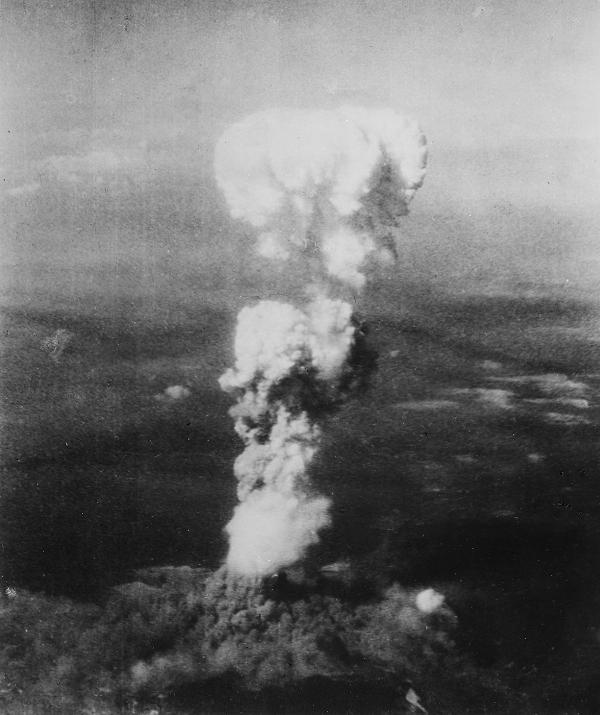
Hanks still needs to read his history books. We dropped the atomic bombs on Hiroshima and Nagasaki because we wanted to avoid invading mainland Japan. Part of that was to save our own soldiers, but part of it was because we recognized that what we’d be fighting weren’t soldiers, but the very tired and underfed elderly, women, and children of Japan- because most of their young men were already in uniform and dying during our campaign on the way to mainland Japan. They were under orders to fight the invaders using bamboo spears if that was their only recourse- and we knew this. We were already firebombing the living shit out of mainland Japan (funny how no one seems to care about those deaths), and the population was near starvation. If we had wanted to annihilate them, we would have. Instead we forced a surrender with far lesser civilian sacrifice- then MOVED IN AND HELPED. The Japanese expected us to crush or enslave them; we expected them to resist with terrorist violence. (Or geurilla warfare as we would have referred to it then.) Instead we each saw the better of that different.
Funny how the accurate history is also the more multiculturally hopeful history.
*Read the beginning of the article for extra ironysauce. Hanks had no interest in history as a child or young man, and Time is setting him up as some kind of media professor of it- with no apparent idea that he’s merely continued to reveal how shallow his knowledge and understanding actually are on a big screen.